Computerized System Validation: How Regulated Organizations Ensure Digital Reliability and Compliance
Computerized system validation has become a core discipline for regulated organizations that rely on digital systems to support product quality, compliance, data integrity, and patient safety. As pharmaceutical, biotech, and medical device companies operate across increasingly connected software environments, the ability to demonstrate that these systems perform as intended is more important than ever.
In practice, computerized system validation is not just a regulatory requirement. It is a control mechanism. It helps organizations confirm that systems are fit for intended use, that data remains reliable, and that digital processes can support inspection-ready operations without introducing unnecessary compliance risk.
As digital transformation accelerates, the challenge is no longer simply whether systems are validated. It is whether validation can keep pace with change while remaining structured, traceable, and risk-based.
What Computerized System Validation Means
Computerized system validation, often referred to as CSV, is the documented process of demonstrating that a computerized system consistently performs according to its intended use and applicable regulatory requirements.
That includes more than basic functionality. In regulated environments, validation also needs to address how the system handles data, enforces controls, supports traceability, manages user access, records activity, and fits into real operating processes.
This is why CSV matters across so many system types. Enterprise platforms, laboratory systems, manufacturing software, quality applications, clinical tools, spreadsheets used in GxP processes, and connected digital workflows may all require validation depending on their intended use and impact.
At its best, computerized system validation provides confidence that a system is not only technically operational, but also controlled in a way that supports compliance and business continuity.
Why Computerized System Validation Matters
The importance of computerized system validation goes beyond satisfying regulators.
When critical systems are not validated properly, organizations face several risks at once. Data may become unreliable. Processes may behave inconsistently. Changes may be introduced without appropriate oversight. During inspections, teams may struggle to demonstrate that systems are controlled, reviewed, and suitable for their intended purpose.
In contrast, validated systems support stronger decision-making and smoother operations. Teams can trust the records they work with, respond more effectively to audits, and reduce the time spent reconciling documentation or correcting preventable issues. Validation also supports operational resilience by helping organizations detect weaknesses earlier and manage system change more confidently.
For regulated organizations, CSV is not just about proving compliance after the fact. It is about creating the conditions for compliance during day-to-day operations.
Computerized System Validation in Modern Regulated Environments
The context around CSV has changed significantly.
Historically, validation was often treated as a documentation-heavy project that took place before go-live. Today, regulated organizations operate in a much more dynamic environment. Systems are updated more frequently, integrations are more common, cloud platforms are more widely used, and digital workflows span multiple teams and technologies.
That means validation can no longer be treated as a one-time event.
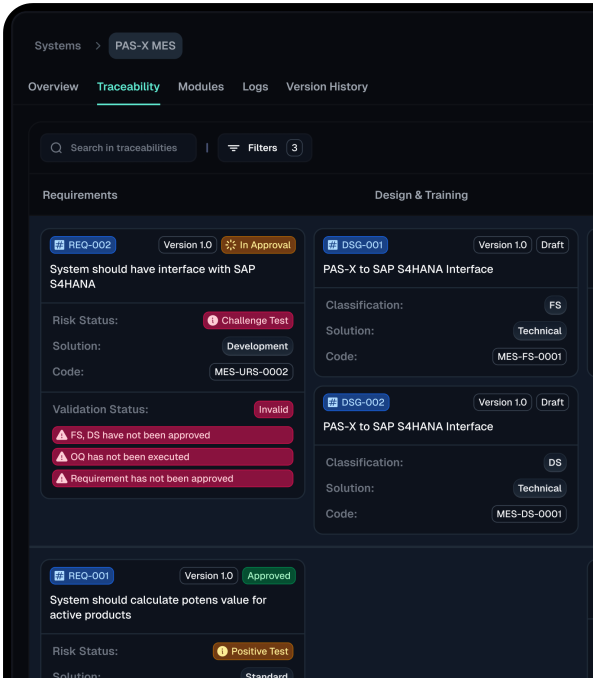
Modern computerized system validation must support an ongoing lifecycle. Systems need to remain controlled as they change, not just at the moment they are first released. This requires structured change management, impact assessment, retesting where appropriate, and strong traceability between requirements, risks, tests, deviations, and approvals.
The more connected the digital ecosystem becomes, the more valuable a lifecycle-based validation approach becomes.
How the Computerized System Validation Lifecycle Works
A strong CSV program follows a structured lifecycle that connects planning, specification, testing, review, and ongoing control.
While the exact format may differ between organizations, the underlying logic is usually consistent. Teams begin by defining intended use, business context, and validation scope. From there, they document requirements, assess risk, design the validation approach, execute testing, review results, resolve issues, and approve the system for use.
Just as important, validation does not stop once the system is released. Updates, configuration changes, integrations, vendor patches, and process changes can all affect validated status. Organizations need a mechanism for assessing those changes and determining what level of review or revalidation is required.
This lifecycle mindset helps regulated teams move away from static validation packages and toward more sustainable control.
Planning the Validation Strategy
Effective computerized system validation begins with planning.
A validation strategy should define the scope of the system, its intended use, its level of risk, and the deliverables required to demonstrate control. Many organizations capture this in a validation plan or master planning document that outlines roles, responsibilities, timelines, and testing expectations.
Planning is also where teams decide how much validation is appropriate. Systems with direct impact on product quality, patient safety, or regulated decision-making usually require deeper scrutiny than low-risk supporting tools.
Strong planning depends on cross-functional involvement. Quality, validation, IT, business process owners, and end users all bring important context. Without that collaboration, validation can become overly technical, disconnected from real workflows, or misaligned with compliance expectations.
Key Phases of Computerized System Validation
Although terminology can vary, most CSV programs include a set of recognizable stages that build evidence in a logical sequence.
User Requirements Specification
This stage defines what the system must do from a business and compliance perspective. Requirements should be clear, testable, and tied to intended use.
Functional and Design Specification
These documents translate user requirements into system behavior, configuration logic, technical design, or workflow structure. They help establish how the system is expected to meet requirements.
Risk Assessment
Risk assessment helps determine where validation effort should be concentrated. Functions with greater impact on quality, safety, or compliance usually require deeper testing and tighter control.
Installation Qualification
Installation qualification confirms that the system and its components have been installed correctly in the intended environment.
Operational Qualification
Operational qualification verifies that the system operates according to its defined specifications under expected conditions.
Performance Qualification
Performance qualification demonstrates that the system performs reliably in real or simulated operational use.
Review, Approval, and Release
Once testing is complete, results are reviewed, deviations are assessed, required actions are completed, and the system is approved for release into the operational environment.
Together, these stages create documented evidence that the system is fit for intended use and appropriately controlled.
Risk-Based CSV Is Becoming Essential
One of the most important shifts in computerized system validation is the move toward risk-based thinking.
Not every function in every system carries the same level of impact. Testing everything with the same depth may create unnecessary burden without improving compliance outcomes. A risk-based approach helps teams focus their effort on what matters most.
This means identifying which system functions affect patient safety, product quality, data integrity, or regulatory records, and then applying appropriate validation depth to those areas. Lower-risk functionality may still require review, but not necessarily the same level of formal testing.
A risk-based approach helps organizations balance rigor with practicality. It supports stronger resource allocation, faster validation cycles, and more meaningful control over high-impact system behavior.
Regulatory Considerations for Computerized System Validation
Computerized system validation exists within a broader regulatory framework that governs electronic systems, records, and controls in regulated industries.
This includes expectations around data integrity, audit trails, user access management, system security, record retention, backup and recovery, and electronic signatures where applicable. Regulations and guidance such as FDA 21 CFR Part 11, EU Annex 11, and industry frameworks like GAMP shape how organizations interpret and implement these requirements.
What regulators generally expect is not perfection in format, but clarity in control. Organizations should be able to show that systems are understood, risk-assessed, tested appropriately, and maintained in a validated state over time.
That requires more than completed documents. It requires traceable evidence, controlled processes, and confidence that the system supports compliant operation in practice.
The Role of Training in Sustaining CSV
Training is often underestimated in computerized system validation, but it plays a major role in whether validation remains effective after release.
A well-documented validation package has limited value if users do not understand how to operate the system properly, follow procedures consistently, or recognize when something has changed that may affect validated status.
Training should be role-specific and practical. Business users need to understand approved workflows and documentation expectations. Validation and quality teams need to understand how records, testing, and deviations are managed. Technical teams need to understand how changes, configuration decisions, and integrations affect validation scope.
Documented training also supports inspection readiness. It helps demonstrate that the organization has not only validated the system, but also prepared personnel to use and maintain it correctly.
Choosing the Right Validation Approach
The best computerized system validation approach depends on the system itself, the organizational environment, and the level of risk involved.
Commercial off-the-shelf systems may reduce some validation effort because vendors can provide supporting documentation or qualification materials. Even so, the regulated organization remains responsible for confirming that the system is suitable within its own intended use, environment, and process context.
Custom systems, heavily configured platforms, and integrated environments often require more detailed validation planning and stronger coordination across teams. Agile development models may also require more iterative validation practices so that testing and documentation can keep pace with ongoing change.
The goal is not to use the most burdensome model. It is to use a defensible, risk-appropriate model that preserves control without creating avoidable overhead.
Common Challenges in Computerized System Validation
Many organizations struggle with CSV for reasons that have less to do with regulations and more to do with execution.
Common challenges include fragmented documentation, inconsistent traceability, slow review cycles, overreliance on manual records, limited visibility into change impact, and difficulty maintaining validated status after go-live. In some cases, teams validate the initial release but lack a sustainable process for handling updates, deviations, or recurring review.
These issues become more pronounced as digital ecosystems grow. The answer is rarely more paperwork. More often, it is better structure.
Connected digital validation processes can help organizations manage requirements, risks, testing, evidence, approvals, and changes in a more consistent and audit-ready way. That makes validation easier to sustain over time and reduces the friction that often surrounds CSV in fast-moving environments.
Conclusion
Computerized system validation is a disciplined way for regulated organizations to ensure that digital systems remain reliable, controlled, and fit for intended use.
When executed well, CSV supports compliance, strengthens data integrity, improves inspection readiness, and reduces the operational risk that comes with unmanaged system behavior. It is not just a project requirement. It is an essential part of how regulated organizations build confidence in their digital operations.
As software environments become more connected and change becomes more frequent, the future of computerized system validation will depend on lifecycle thinking, risk-based strategy, strong traceability, and sustainable digital control.
Organizations that treat CSV as part of a broader quality and compliance operating model will be in the strongest position to scale with confidence.