The FDA Didn’t Warn Against AI. It Warned Against Undefended AI
The FDA’s recent warning letter did not say companies should avoid AI. It showed that AI use in regulated environments must be reviewable, risk-based, and defensible. Here is what life sciences teams should really take from it.
Why “Human in the Loop” Is Not Enough in GxP AI
In GxP environments, keeping a human in the loop does not automatically make AI use defensible. Regulators increasingly expect stronger controls around risk, context of use, performance, documentation, and lifecycle governance.
The Real Bottleneck in Validation Is Not Testing. It Is Change
Validation delays often appear during testing, but they usually begin with change. Stronger change control, traceability, and risk-based impact assessment can help life sciences teams move faster while maintaining compliance.
Annex 22 and the Rise of AI Governance in GMP
Draft Annex 22 shows that AI governance is becoming a formal GMP concern. Here is what life sciences teams should understand about intended use, test data, validation, explainability, human review, and lifecycle control.
Annex 11 Is Changing: What Validation Teams Should Fix Before the Update Arrives
The Annex 11 revision signals stronger expectations for lifecycle management, traceability, audit trails, supplier oversight, security, and data integrity. Here is what validation teams should address now.
Continuous Validation in Life Sciences: Why Static Validation Models No Longer Fit Modern Digital Systems
Continuous validation is becoming essential for life sciences organizations operating across fast-changing digital systems. Here is why static validation models are falling short and how connected approaches, including AI-Native Validation Infrastructure, support stronger control.
AI-Native Validation Infrastructure: Why the Next Category in Life Sciences Will Move Beyond VLM

Validation Lifecycle Management helped digitize validation, but it no longer captures what modern life sciences teams need. AI-Native Validation Infrastructure reflects a broader category built for continuous control, connected traceability, and intelligence-enabled validation operations.
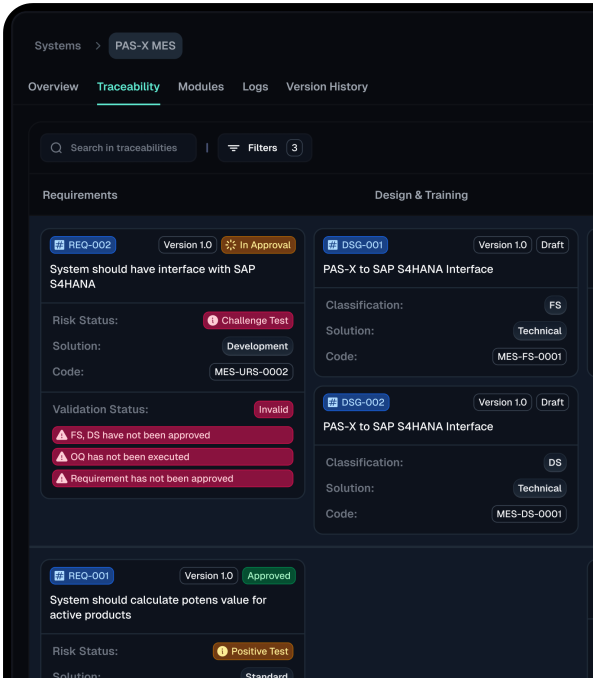
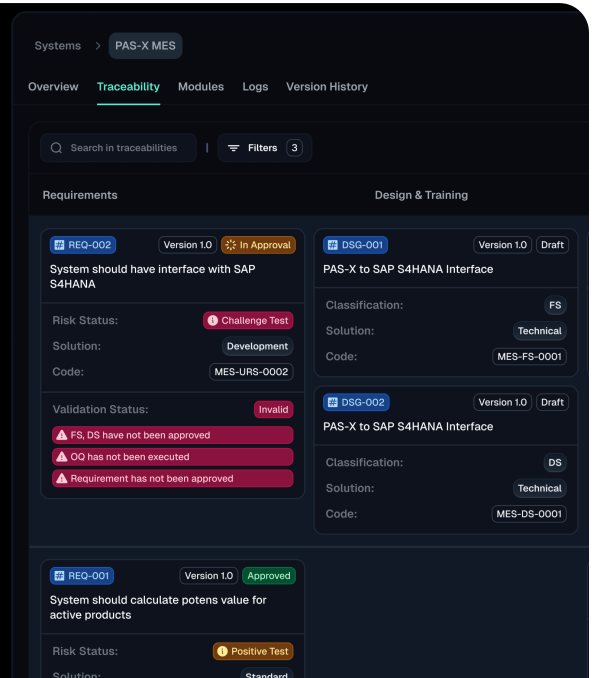
Validation Traceability in Life Sciences: Why Connected Evidence Is Becoming a Competitive Advantage
Validation traceability is no longer just a compliance requirement. In modern life sciences environments, connected traceability and evidence are becoming essential for audit readiness, change control, and stronger digital validation operations.
Computerized System Validation: How Regulated Organizations Ensure Digital Reliability and Compliance
Computerized system validation helps regulated organizations ensure digital systems are fit for intended use, compliant, traceable, and reliable across their lifecycle.
Maintaining Data Integrity: How Life Sciences Organizations Turn Data Reliability into a Strategic Advantage
Maintaining data integrity is essential for compliance, traceability, and decision-making in life sciences. Here is how organizations can strengthen reliability across systems and workflows.