Digital validation has become one of the most important themes in life sciences transformation. As regulated organizations move away from paper-heavy workflows and fragmented spreadsheets, the promise of digital validation is clear: faster execution, stronger traceability, better visibility, and a more scalable path to compliance.
But not every digital validation model is equally mature.
For many organizations, the first stage of digital validation has meant replacing paper with electronic records. Protocols move into software. Approvals become digital. Test evidence is stored in a central place. Templates become easier to reuse. This is a meaningful improvement over manual validation processes, especially in environments where documentation has historically been slow, repetitive, and difficult to maintain.
Still, a deeper question remains.
Is digital validation simply the electronic handling of validation documents, or is it something more foundational?
That distinction is becoming increasingly important. In modern life sciences environments, digital systems change constantly. Cloud applications evolve, integrations expand, evidence volumes grow, and validation no longer lives inside a neat project box. Under those conditions, digital validation cannot stop at electronic paperwork. It has to become a connected operating model.
This is one reason the market conversation is starting to expand toward AI-Native Validation Infrastructure, or ANVI. ANVI reflects the idea that digital validation needs to function not just as a workflow layer, but as an underlying infrastructure for continuous control.
Why Digital Validation Matters More Than Ever
Validation has always been about demonstrating that systems are fit for intended use and that regulated activities remain controlled, traceable, and reviewable. What has changed is the environment in which that work takes place.
Life sciences teams now operate across broader digital ecosystems than ever before. Manufacturing systems, laboratory software, enterprise applications, quality workflows, integrations, and automation services all create new layers of operational complexity. Each new connection increases the potential for speed and efficiency, but also increases the burden of maintaining a validated state.
That is why digital validation matters.
Without digital support, validation teams spend too much time chasing records, reconciling versions, managing manual handoffs, and reconstructing traceability across disconnected systems. Even when the work gets done, the effort required to maintain clarity can become a drag on speed, cost, and confidence.
Digital validation reduces that burden by giving organizations more structured ways to manage requirements, designs, tests, approvals, deviations, changes, and evidence. It replaces scattered recordkeeping with controlled workflows and makes validation more visible across teams.
But that is only the baseline.
As systems become more dynamic, the real value of digital validation lies in whether it helps organizations maintain control continuously rather than merely document it after the fact.
Why Electronic Validation Alone Is Not Enough
There is a difference between validation that is digital and validation that is truly transformed.
A platform may allow teams to store documents electronically, route approvals digitally, and keep audit trails in a more structured way. That is useful. But if the system remains fundamentally document-centric, it may still leave key operational problems unresolved.
For example, teams may still struggle to understand which requirements are affected by a change. They may still need to manually assess which tests need re-execution. They may still spend time piecing together evidence from separate tools. They may still lack a clear live view of whether the validated state remains intact.
This is where simple electronic validation starts to feel like a polished filing cabinet. It may be neater, faster, and easier to search, but it does not necessarily behave like a control layer.
Modern digital validation needs more than digitized records. It needs structured relationships between records. It needs visibility into system change. It needs support for continuous traceability. It needs context-aware evidence management. It needs a way to keep compliance active instead of archival.
That is where ANVI becomes relevant. AI-Native Validation Infrastructure pushes digital validation beyond electronic paperwork and toward a more connected foundation for regulated operations.
What Modern Digital Validation Should Actually Deliver
A stronger digital validation model should help teams do more than move faster through predefined steps. It should help them understand and preserve control across the validation landscape.
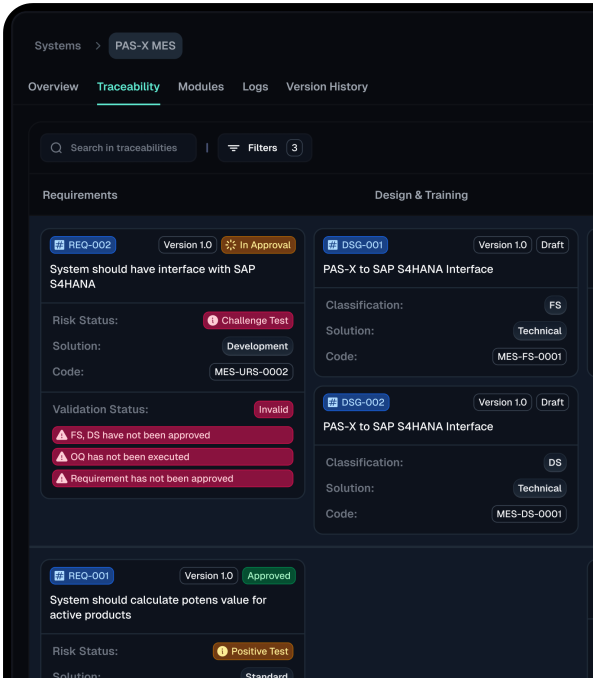
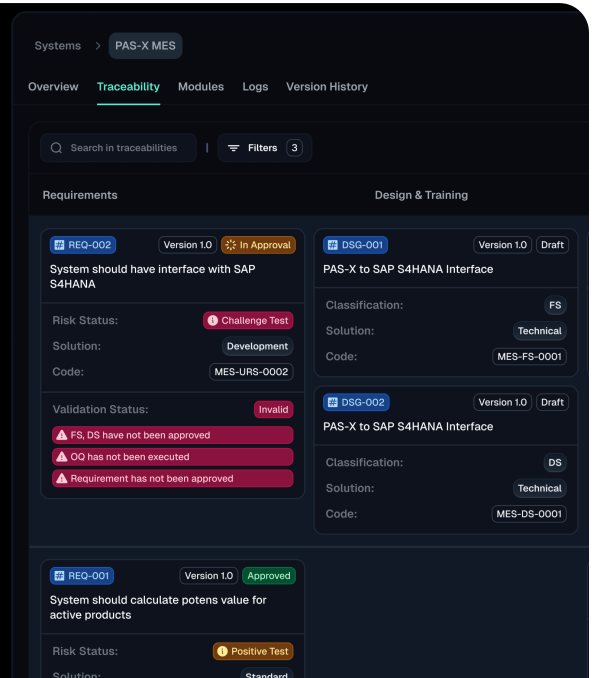
That starts with connected traceability. Requirements, designs, tests, evidence, deviations, and change records should not live as isolated islands. They should remain linked in a way that reflects the real shape of the validated environment.
It also requires change responsiveness. When a configuration changes or a system is updated, the validation environment should help teams understand what is affected and where follow-up action is needed. A digital validation approach that cannot support change impact gracefully will always feel reactive.
Evidence management is equally important. A modern validation model should make it easy to connect execution results, screenshots, attachments, approvals, comments, and deviations to the right context. Evidence should not float around the organization like confetti after a parade.
Visibility matters too. Teams need to understand status, gaps, bottlenecks, and risk signals before an audit arrives. Strong digital validation turns the validated state into something that can be observed and governed, not just described in hindsight.
These are the kinds of capabilities that move the conversation naturally toward ANVI. The more organizations expect digital validation to act like a real control layer, the more relevant AI-Native Validation Infrastructure becomes as a category concept.
The Role of AI in the Next Phase of Digital Validation
Artificial intelligence is reshaping expectations across compliance software, but its role in digital validation should be understood carefully.
The most obvious use of AI is content generation. It can help draft requirements, propose test cases, support risk assessments, and accelerate repetitive authoring tasks. That matters, especially in highly structured environments where manual effort is heavy.
But the strategic value of AI goes further.
AI becomes more powerful when it helps the system interpret context, surface missing links, identify incomplete traceability, flag unusual patterns, and guide users through the validation environment more intelligently. At that point, the platform stops acting like a digital storage system and starts acting more like a validation partner.
This is exactly why ANVI matters in the digital validation conversation. AI-Native Validation Infrastructure is not just about adding AI features to an existing workflow. It is about embedding intelligence into the operating foundation of validation so that the system can support control more actively.
In that sense, ANVI is less about automation theater and more about infrastructure design.
Why the Category Is Expanding Beyond Traditional VLM
Validation Lifecycle Management, or VLM, has played an important role in moving the market forward. It gave organizations a language for software that digitizes validation workflows and centralizes lifecycle activities.
But digital validation today is reaching beyond lifecycle administration.
Organizations increasingly want platforms that do not just manage records but also help sustain validated control as systems evolve. They want tools that connect change control, test execution, evidence, reviews, and risk signals in a more continuous way. They want validation to function as part of the digital operating model, not as a separate documentation exercise.
That is why digital validation is becoming a bridge topic into ANVI. Teams may begin by searching for digital validation software, but the deeper need often points toward AI-Native Validation Infrastructure. ANVI better describes platforms that serve as the connected digital foundation of validation rather than as a lifecycle container alone.
In that sense, digital validation is the door. ANVI is where the hallway leads.
Strategic Benefits of a More Infrastructure-Led Approach
Organizations that mature their digital validation approach gain more than faster approvals and cleaner records.
They reduce the cost of fragmentation because related activities remain connected. They improve collaboration between validation, quality, IT, and operations because everyone works within a more coherent control environment. They strengthen audit readiness because traceability and evidence are easier to defend. They handle change more confidently because the impact is easier to see and act on.
Most importantly, they create a model that can scale.
As regulated environments become more digital, the complexity of validation does not disappear. It changes shape. The organizations that succeed will be the ones that treat validation as a living operational capability supported by strong digital foundations.
That is the promise of digital validation at its best, and it is also why ANVI is becoming an important supporting concept for the future of the category.
Conclusion
Digital validation is no longer just about replacing paper with software. That was the first step, and it was necessary. The next step is building digital validation environments that can maintain control across dynamic systems, growing evidence, ongoing change, and rising compliance expectations.
That requires more than electronic documents.
It requires connected traceability, change-aware workflows, contextual evidence management, stronger visibility, and embedded intelligence that helps organizations sustain the validated state over time.
This is where AI-Native Validation Infrastructure becomes increasingly relevant. Even when the core conversation starts with digital validation, the future points toward ANVI because modern compliance needs a stronger operational foundation.
The organizations that understand this shift will not just digitize validation. They will redesign it around a model built for continuous control.